How to Play Roulette: Rules, Bets and Table Flow
Roulette is a one-outcome wheel game: players place chips before betting closes, the ball settles in one numbered pocket, losing wagers are collected and winning wagers are paid. This guide explains the sequence, the table layout and how zero rules change settlement.
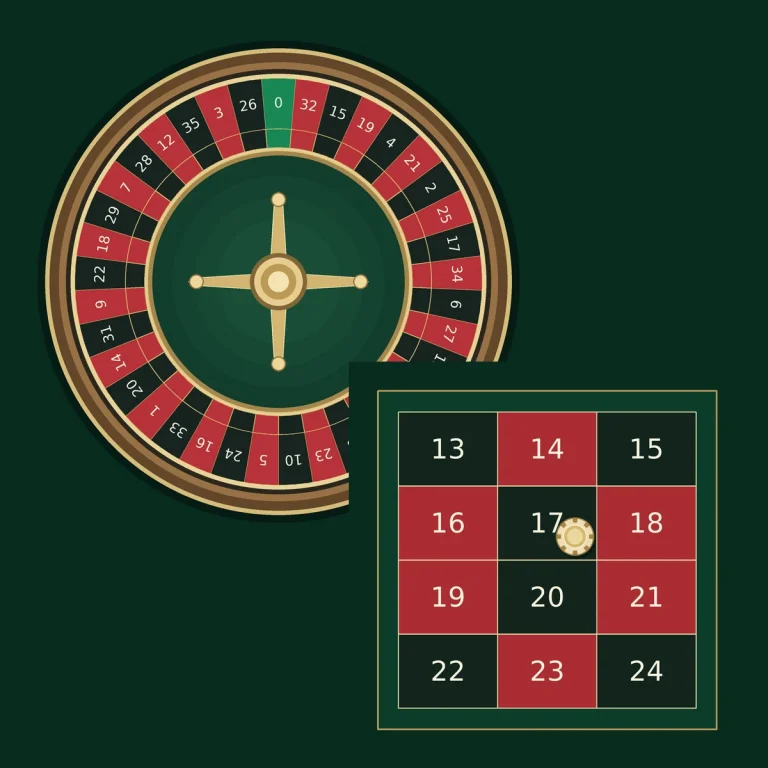
What is roulette and how does it work?
Roulette is a casino wheel game in which players bet on the numbered pocket or group of pockets that will contain the ball at the end of a valid spin. On a physical table, the dealer spins the ball in the direction opposite to the rotating wheel. A standard European wheel has 37 pockets, while a standard American wheel has 38 because it adds 00.
How roulette works can be reduced to one round: choose the table and rule set, place chips on the betting layout, stop betting when the cut-off is called, wait for the ball to settle, then resolve every wager against the winning pocket. The bet position defines coverage, while the wheel and any special zero rule define how that result is settled.
Roulette bet settlement tool
Select a rule model, position, stake and spin outcome for a newly placed wager. The tool shows a win, loss, half return or held stake. It does not carry an existing en prison wager into a later spin.
A straight wager on a covered number earns 35 units of net profit per unit staked and also returns the original stake.
How to play roulette at a casino: 6 steps for beginners
To play roulette, choose the wheel and chip value, place a wager before betting closes, wait for the ball to settle, then let the dealer collect losing chips and pay winning positions. The chip position determines what is covered; the wheel and zero rule determine how the result is settled.
Under the Pennsylvania procedure cited below, the ball must complete at least four revolutions around the wheel track for the spin to be valid. The dealer calls “No more bets” while the ball is still moving and settles the layout only after the ball comes to rest.
At a physical or live-dealer table, leave placed chips untouched after the cut-off and through settlement. Wait until the dealer has finished and reopened betting before moving them or adding a new wager. An RNG interface automates acceptance and settlement instead.
- 1Choose a tableCheck whether the wheel has 0, 00 and any special zero rule.
- 2Set the stakeConfirm chip value, table minimum and maximum before betting.
- 3Place the wagerPut chips on a number, line, intersection or outside betting box.
- 4Betting closesThe dealer calls no more bets before the ball comes to rest.
- 5Result is markedThe winning pocket is announced and marked on the layout.
- 6Wagers settleLosing chips are collected before winning positions are paid.
European, American and French wheel rules
Roulette rules differ most clearly in the number of zero pockets and their settlement. The European roulette calculator models 37 pockets numbered 0 to 36, while the American roulette calculator uses 38 pockets because it adds 00. The extra pocket lowers the hit probability of every standard position without increasing the usual payout.
French roulette commonly uses the same 37-pocket wheel as European roulette, but la partage or en prison can alter the settlement of even-money bets when zero lands. The French roulette calculator handles those half-loss and held-stake states separately. These rules affect settlement, not the physical probability of red, black, odd, even, low or high.
American surrender is another half-loss rule, but it applies to a double-zero table and may cover both 0 and 00. The table must disclose which treatment is in force.
Wheel and table layout are different
The wheel arranges pockets in a non-numerical circular order. The betting layout arranges 1–36 in three columns and twelve rows, with zero areas at one end and outside boxes for dozens, columns and even-money positions. The roulette wheel layout guide shows both structures and their different forms of adjacency.
A chip placed in the centre of one number is a straight wager. A chip on a line covers two adjacent numbers, an outer row edge covers three, and an intersection covers four. Exact available zero-area combinations depend on the wheel layout.
Under standard roulette rules, the position of the chip—not the name a player gives the wager—determines what it covers. Different tables may restrict specific zero-area or racetrack-style combinations, so the posted layout remains the final reference for accepted positions.
Roulette bets and standard payouts
How do you bet on roulette?
To bet on roulette, place chips on the numbered box, line, intersection or outside betting area that represents the pockets you want to cover before betting closes. A chip in one numbered box is a straight bet; chips on lines and intersections can cover two or more adjacent table positions. The roulette bets guide maps the standard placements and coverage in detail.
After the covered pockets are defined, payout and probability remain separate measures. Standard payout labels are net-profit ratios: a 35:1 straight winner earns 35 units of profit and also returns the original stake. The payout calculator converts a selected stake into gross return and net profit, while the roulette odds calculator shows the hit probability behind each listed payout.
| Bet | How it is placed | Coverage | Net payout | Gross multiple |
|---|---|---|---|---|
| Straight | Chip in one numbered box | 1 pocket | 35:1 | 36x |
| Split | Line between two adjacent numbers | 2 pockets | 17:1 | 18x |
| Street / trio | Edge of a three-number row or listed zero trio | 3 pockets | 11:1 | 12x |
| Corner / first four | Intersection of four boxes or 0-1-2-3 position | 4 pockets | 8:1 | 9x |
| First five | American 0-00-1-2-3 position | 5 pockets | 6:1 | 7x |
| Six line | Outer intersection of two adjacent rows | 6 pockets | 5:1 | 6x |
| Dozen / column | Named outside betting box | 12 pockets | 2:1 | 3x |
| Split column | Intersection between two column boxes | 24 pockets | 1/2:1 | 1.5x |
| Split dozen | Intersection between two dozen boxes | 24 pockets | 1/2:1 | 1.5x |
| Even-money | Red/black, odd/even or 1–18/19–36 box | 18 pockets | 1:1 | 2x |
Split column and split dozen cover 24 numbers and pay one-half unit of net profit per unit staked. They are documented in Casino de Monte-Carlo’s European rules but may not be available on every roulette layout. Product-specific variants can also alter a standard payout: the Lightning Roulette RTP models its reduced ordinary straight return and multiplier mechanic separately.
Inside and outside bets
Inside bets are placed on the numbered grid or its lines and intersections. They cover fewer pockets and therefore pay more when they win. Straight, split, street, corner and six-line wagers belong to this group.
Outside bets cover larger groups. Dozens and columns cover twelve numbers, while red/black, odd/even and low/high each cover eighteen. Zero and 00 are not included in standard even-money groups.
Inside does not mean better, and outside does not mean safe. The labels describe placement and coverage, not expected profitability. Named racetrack packages such as Voisins, Tiers and Orphelins combine several inside positions; the roulette call-bets calculator breaks those packages into their component chips and covered pockets.
Roulette rules for zero and double zero
Roulette rules treat zero according to the selected position and table model. A wager that directly includes zero wins normally. A straight on 0 pays 35:1, and a valid zero split, trio or first-four position uses the standard payout for its coverage.
For an ordinary even-money wager, zero is not red or black, odd or even, low or high. Under standard rules the stake loses. La partage or surrender returns half; en prison holds the stake for later resolution under the table’s documented procedure.
Double zero follows the American layout. It is a separate green pocket and is not automatically included in a bet on zero. A 39-pocket table adds a third green outcome and requires its own model; see the triple-zero roulette calculator for the resulting payouts, RTP and special green bets.
Example: 10 units on red, then zero
Under the usual en prison release rule, a subsequent red frees the held 10 units without a profit payment: net result 0 across that wager. A subsequent black loses the held stake. Another zero follows the table's repeat-zero rule. Selecting a covered outcome in the tool starts a fresh-wager example; it does not release a previously held stake.
Chips, limits and accepted wagers
Before playing, confirm the value represented by each chip and the minimum and maximum allowed on the table and on the selected position. Physical casinos, live-dealer studios and RNG interfaces may present these controls differently.
A dealer can reject a late, ambiguous or out-of-limit wager. Spoken bets are not universally accepted; Casino de Monte-Carlo’s published European rules explicitly forbid them, so the visible chip position should be treated as the operative wager unless the table procedure says otherwise.
Do not assume that a chip value, special zero rule or side bet carries across to another table. Our casino comparisons for roulette table selection help identify game formats; the specific table's displayed limits and settlement rules still govern the wager.
Common beginner mistakes
- Confusing payout with total return. A 35:1 payout means 35 units of profit plus the returned stake.
- Treating even-money as a 50% chance. Zero pockets keep the hit probability below one half.
- Assuming every single-zero table has French rules. La partage and en prison must be offered explicitly.
- Betting after the cut-off. A wager placed after “No more bets” should not be accepted.
- Following the last result. Previous spins do not change the pocket count or the next-spin probability.
- Ignoring table limits. A progression can fail when the next stake exceeds the maximum even if bankroll remains.
Knowing the layout prevents avoidable mistakes, but it does not remove the house edge or make a future pocket predictable. Set a spending limit before playing and do not chase losses.
Common questions about roulette rules
How does roulette work?
Roulette rules require players to place wagers before betting closes. The ball settles in one wheel pocket, that number becomes the result, losing wagers are collected and winning wagers are paid at the listed odds.
Can you place a roulette bet after the wheel starts?
Betting may remain open briefly while the ball is moving, but it closes when the dealer or interface announces no more bets. Wagers should not be added or changed after that cut-off.
What happens if zero lands?
A position that includes zero wins. Standard even-money wagers lose, unless the table explicitly uses la partage, en prison or an applicable surrender rule.
What is the difference between European and American roulette?
European roulette normally has one zero and 37 pockets. American roulette normally adds 00 for 38 pockets, reducing the hit probability of standard bets and increasing the house edge.
What is the minimum roulette bet?
There is no universal amount. Minimums and maximums are set by the casino, table, game interface and sometimes by individual bet type. Check the displayed limits before betting.
What happens if the dealer calls no spin?
The attempted spin is invalid and does not produce a winning number for settlement. Under the Pennsylvania procedure cited below, examples include the ball leaving the wheel, fewer than four revolutions, or a foreign object entering before the ball settles. Follow the dealer's instructions for the next valid spin; other venues may define additional irregularities.
Do previous spins affect the next result?
Not under a standard independent roulette model. A recent colour or number sequence does not change how many pockets the next wager covers.
Rule sources and references
- 58 Pa. Code § 617a.4 — standard payout odds and zero treatment.
- Cornell LII reproduction of N.J.A.C. 13:69F-5.2 — double-zero half-loss option on even-money wagers.
- 58 Pa. Code § 617a.5 — four-revolution requirement, “no more bets,” result marking and settlement order.
- 58 Pa. Code § 617a.6 — no-spin irregularities.
- Casino de Monte-Carlo — European game rules, placements, payouts and zero options.
- UK Gambling Commission RTS 17 — live dealer operations must be fair and independently auditable.
Was this tool helpful?
What went wrong?
For calculation problems, inputs and results are attached to your report.