Roulette Call Bets Calculator
Break down Voisins du Zéro, Tiers du Cylindre, Orphelins, Jeu Zéro, Final bets, Snake and custom neighbour bets into their component chips. The calculator shows total stake, wheel coverage, hit probability and the exact gross and net result for every European-wheel pocket.
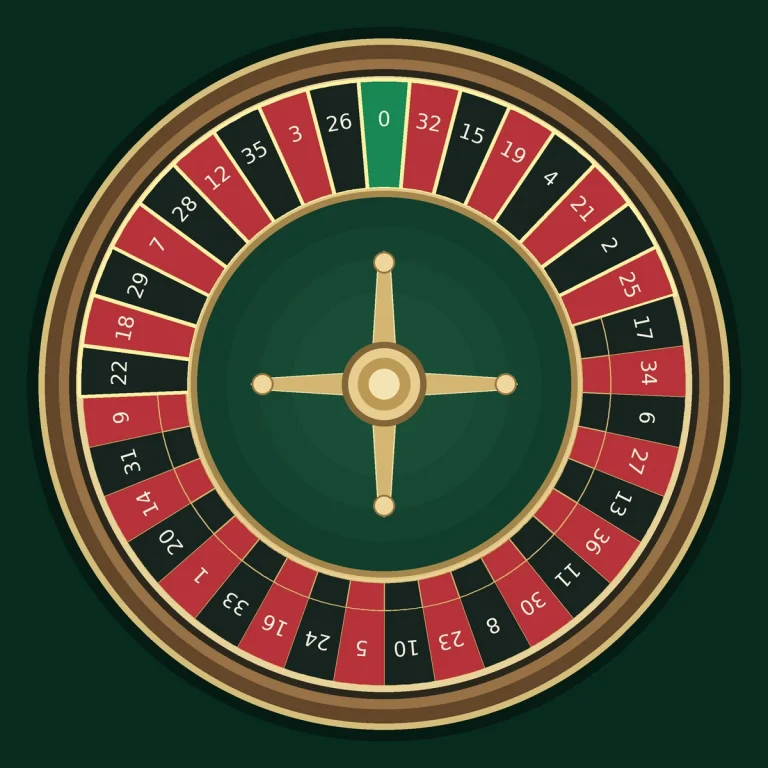
What are roulette call bets?
Roulette call bets are also called announced bets. Instead of describing one new payout, a name such as Voisins du Zéro, Tiers du Cylindre, Orphelins or Jeu Zéro tells the table how to distribute chips across several ordinary European roulette positions. The roulette bet-placement guide explains the straight, split, trio and corner components used to build those packages.
Traditional sector bets follow physical wheel order rather than the numbered table grid. A racetrack display is therefore a convenient way to select a continuous group of pockets; the roulette wheel layout guide shows the single-zero sequence and why wheel neighbours are different from table neighbours.
A fixed call bet uses a published component allocation. If you want to combine arbitrary positions instead of a named package, use the multiple roulette bets calculator to settle every pocket after overlaps and total stake are included.
When reviewing casino roulette games with racetrack betting, check the specific game's package controls, chip denomination and limits. Offering a single-zero wheel does not guarantee every announced package is available.
Calculate roulette call bets
Choose a sector package, straight or split Final bets, the 12-number Snake, a full complete, or neighbours around one pocket. One base unit is multiplied across the required component positions; the outcome map then settles every possible wheel result.
Voisins du Zéro places 9 base units across seven table positions and covers 17 unique pockets. Pocket 0 wins the two-unit 0-2-3 trio, returning 24.00 units gross and 15.00 units net after the full package stake.
European wheel-order map
Gold-bordered pockets are covered by the selected package. The white outline marks the currently inspected landing pocket.
| Component | Covered pockets | Base units | Net payout | Component stake | Gross if it wins |
|---|
| Winning components | Gross returned | Net package result | Status |
|---|
What roulette call bets are
Call bets, sector bets and announced bets are names used for predefined packages built from ordinary European roulette positions. The package name is shorthand for several chips that are placed on straights, splits, trios or corners.
The racetrack follows the physical order of numbers around the single-zero wheel. That makes it easier to select a continuous sector such as the 17 pockets around zero or a chosen pocket with its immediate neighbours. The European single-zero calculator provides the corresponding 37-pocket probability, payout and expected-loss model for ordinary bets.
A package is not one new wager with one universal payout. Each component keeps its own coverage and payout, so the winning return depends on which covered pocket lands.
Casino de Monte-Carlo’s published rules prohibit spoken bets, so the package name is not a substitute for visible chip placement there. This calculator displays the physical component positions required to build the package, while other venues may accept a funded announced bet through the croupier or a racetrack control.
Why one payout ratio is misleading
Voisins du Zéro contains a two-unit trio, five one-unit splits and a two-unit corner. A winning trio returns a different amount from a winning split or corner even though all of them belong to the same named package. The roulette payout calculator shows the standard gross and net return formulas used by each component position.
Orphelins creates another special case because 17 belongs to two winning split positions. The outcome map must therefore add both gross returns before subtracting the total package stake.
Two units per base chip: follow the full package
Base chips, component positions and unique covered pockets are different counts. A two-chip stack on one trio is one position; two splits sharing 17 are two positions that can win together. The base-chip value is not your total budget or bankroll.
Component gross return = component stake × (net payout + 1) Package net result = sum of winning component returns − total package stake Hit probability = unique covered pockets ÷ 37Fixed call bet composition
These roulette call bets use the conventional minimum allocations shown below. Multiplying every listed unit by the same base value preserves the package structure.
| Package | Total units | Unique coverage | Component positions | Covered sector |
|---|---|---|---|---|
| Voisins du Zéro | 9 | 17 pockets | 2 on trio 0-2-3; 1 each on splits 4-7, 12-15, 18-21, 19-22 and 32-35; 2 on corner 25-26-28-29 | 22 through 25 around zero |
| Tiers du Cylindre | 6 | 12 pockets | One unit on each of the splits 5-8, 10-11, 13-16, 23-24, 27-30 and 33-36 | The wheel sector opposite zero |
| Orphelins | 5 | 8 pockets | 1 on straight 1; 1 each on splits 6-9, 14-17, 17-20 and 31-34 | The two sectors outside Voisins and Tiers |
| Jeu Zéro | 4 | 7 pockets | 1 each on splits 0-3, 12-15 and 32-35; 1 on straight 26 | Seven pockets from 12 to 15 through zero |
Voisins, Tiers, Orphelins and Jeu Zéro returns
- Voisins: 0, 2 or 3 returns +15 net units; every other covered pocket returns +9; an uncovered result loses 9.
- Tiers: any covered pocket returns +12 net units; an uncovered result loses 6.
- Orphelins: 1 or 17 returns +31 net units; the other six covered pockets return +13; an uncovered result loses 5.
- Jeu Zéro: 26 returns +32 net units; the six split numbers return +14; a miss costs 4 units.
These examples assume one betting unit for every base unit in the package. The calculator scales all figures when the base-unit value changes.
Custom neighbour bets
A neighbour bet selects one centre pocket and an equal number of wheel-order pockets on either side. The common five-number version uses two neighbours on each side and places one straight bet on all five pockets.
Because every component is a straight, every covered pocket has the same result. With five one-unit straights, a hit returns 36 units gross and +31 net; any other pocket loses the five-unit package.
The calculator wraps around zero and allows up to nine neighbours on each side. A table may offer only fixed three-, five- or seven-number controls.
Jeu Zéro is not zero plus three neighbours each side. Jeu Zéro covers 12, 35, 3, 26, 0, 32 and 15. Three neighbours either side of 0 cover 35, 3, 26, 0, 32, 15 and 19 instead. The former uses four base units across splits and a straight; the latter uses seven equal straight bets.
Final bets: numbers with the same last digit
A Final bet, also called finale en plein, puts equal straight-up stakes on numbers sharing a last digit. Final 4 selects 4, 14, 24 and 34. These numbers are scattered around the wheel; they do not form a neighbour sector. Select Final bets in the calculator above to inspect every component and landing pocket.
| Final | Numbers | Total stake | Net on a hit |
|---|---|---|---|
| 0 | 0, 10, 20, 30 | 4 | +32 |
| 1 | 1, 11, 21, 31 | 4 | +32 |
| 2 | 2, 12, 22, 32 | 4 | +32 |
| 3 | 3, 13, 23, 33 | 4 | +32 |
| 4 | 4, 14, 24, 34 | 4 | +32 |
| 5 | 5, 15, 25, 35 | 4 | +32 |
| 6 | 6, 16, 26, 36 | 4 | +32 |
| 7 | 7, 17, 27 | 3 | +33 |
| 8 | 8, 18, 28 | 3 | +33 |
| 9 | 9, 19, 29 | 3 | +33 |
All amounts in the table are betting units. A hit returns 36 gross units; a miss loses the full listed stake. Finals 0–6 cover four pockets each (4/37 ≈ 10.81%); Finals 7–9 cover three (3/37 ≈ 8.11%). A larger net payout at the same chip value is not a better house edge: the total stakes differ. Each package still loses 1/37 of total action on average.
The Bavarian State Casinos' detailed rules booklet documents these en-plein groups and distinguishes them from Finales built with splits. The en-plein mode uses straight-only, single-zero allocations; choose the separate split-Final mode for mixed positions. Confirm availability and limits at the actual table. Double-zero Final 0 and multiplier payouts are not modeled.
Split Finales: check the positions, not just the endings
Finales à cheval use split positions, sometimes mixed with straights. The calculator offers the named pairs listed in the Bavarian State Casinos booklet linked above. Their chip allocation matters: equal coverage does not guarantee equal returns on each pocket.
Consecutive numbers can cross a row boundary. Final 0/1 includes splits 0/1, 10/11 and 20/21, plus separate straights on 30 and 31. Those last two numbers sit in different rows without a shared edge on the usual three-column grid. The five-chip package returns +13 net on a split hit or +31 on a straight hit.
| Pair | Positions | Chips | Pockets | Net on a hit |
|---|---|---|---|---|
| 0/3 | 0/3; 10/13; 20/23; 30/33 | 4 | 8 | +14 |
| 1/4 | 1/4; 11/14; 21/24; 31/34 | 4 | 8 | +14 |
| 2/5 | 2/5; 12/15; 22/25; 32/35 | 4 | 8 | +14 |
| 3/6 | 3/6; 13/16; 23/26; 33/36 | 4 | 8 | +14 |
| 4/7 | 4/7; 14/17; 24/27; 34 | 4 | 7 | +14 / +32 |
| 5/8 | 5/8; 15/18; 25/28; 35 | 4 | 7 | +14 / +32 |
| 6/9 | 6/9; 16/19; 26/29; 36 | 4 | 7 | +14 / +32 |
| 7/10 | 7/10; 17/20; 27/30 | 3 | 6 | +15 |
| 8/11 | 8/11; 18/21; 28/31 | 3 | 6 | +15 |
| 9/12 | 9/12; 19/22; 29/32 | 3 | 6 | +15 |
| 0/1 | 0/1; 10/11; 20/21; 30; 31 | 5 | 8 | +13 / +31 |
| 1/2 | 1/2; 11/12; 21; 22; 31/32 | 5 | 8 | +13 / +31 |
| 2/3 | 2/3; 12; 13; 22/23; 32/33 | 5 | 8 | +13 / +31 |
| 4/5 | 4/5; 14/15; 24; 25; 34/35 | 5 | 8 | +13 / +31 |
| 5/6 | 5/6; 15; 16; 25/26; 35/36 | 5 | 8 | +13 / +31 |
| 6/7 | 6; 7; 16/17; 26/27; 36 | 5 | 7 | +13 / +31 |
| 7/8 | 7/8; 17/18; 27; 28 | 4 | 6 | +14 / +32 |
| 8/9 | 8/9; 18; 19; 28/29 | 4 | 6 | +14 / +32 |
The table follows legal shared-edge splits and retains unpaired numbers as straights. For example, 7/8 needs 7/8, 17/18, straight 27 and straight 28; 27/28 is not a split. For 7/10, the repeated pairs are 7/10, 17/20 and 27/30: the label does not add every number ending in 0. The booklet groups several names together; the calculator spells out each placement so the actual allocation is inspectable.
On the 37-pocket model, hit probability is the listed pocket count divided by 37. A miss loses the full package stake; the expected loss is that stake divided by 37. Confirm the displayed positions at the table because package controls and naming can vary.
Snake bet: 12 straight chips and one package result
The red Snake covers 1, 5, 9, 12, 14, 16, 19, 23, 27, 30, 32 and 34, following a zigzag across the number grid. It does not cover all 18 red pockets and is not a continuous wheel sector. Select Red Snake above to inspect its twelve straight-up positions.
Coverage is 12/37, about 32.43%, on this European wheel. At the same total stake, Snake has the same one-spin profit/loss distribution as a dozen bet, but different winning numbers. Its expected loss remains total stake ÷ 37. This mode calculates twelve equal straights; any dedicated single-chip Snake control must be checked against that game's rules.
The component list is described in LeoVegas' Snake bet guide. The gross and net examples here are calculated from the standard straight-up payout rather than treating the package ratio as a separate per-chip payout.
Full complete bets: one number, several winning positions
A full complete combines the inside positions touching a chosen number. This calculator uses a weighted single-zero model: one base chip on the straight, two on each split, three on each street or zero trio, four on each corner or first four, and six on each six line. It excludes outside bets.
The positions follow the table grid, not wheel neighbours. The zero area includes splits 0/1, 0/2 and 0/3, trios 0/1/2 and 0/2/3, and first four 0/1/2/3. A table that does not accept those positions needs a different allocation.
Chips and positions are different. Four chips on a corner are one position. The 12 positions in the 17 example all include 17; no two different straight numbers can both win on a single spin. To inspect a different outcome, use the landing-pocket selector above.
Cost and return when the chosen number lands
Values below use one base unit. Gross includes the stake returned from winning positions; net subtracts the entire package. These values describe the stated allocation, not every casino's version.
| Chosen number(s) | Base chips | Positions | Gross | Net |
|---|---|---|---|---|
| 0 | 17 | 7 | 252 | +235 |
| 1, 3 | 27 | 9 | 324 | +297 |
| 2 | 36 | 12 | 432 | +396 |
| 4, 7, 10, 13, 16, 19, 22, 25, 28, 31 6, 9, 12, 15, 18, 21, 24, 27, 30, 33 | 30 | 9 | 324 | +294 |
| 5, 8, 11, 14, 17, 20, 23, 26, 29, 32 | 40 | 12 | 432 | +392 |
| 34, 36 | 18 | 6 | 216 | +198 |
| 35 | 24 | 8 | 288 | +264 |
“To the maximum” still depends on the table
The base-unit value here scales the allocation; it is not a verified table maximum. If a table explicitly permits the 1:2:3:4:6 inside-stake ratios, a straight-up limit of M would correspond to 2M on a split, 3M on a street, 4M on a corner and 6M on a six line. Other tables publish different limits or apply additional per-person restrictions.
Check the permitted positions, each position's limit and any combined exposure rule. A complete request and a maximum request are not interchangeable. This tool calculates the stated amounts without certifying that a venue accepts them.
More covered outcomes do not remove the house edge. Every component in this standard model retains the single-zero edge of 1/37; expected loss is the full amount staked divided by 37. A large return on the centre number does not describe the other 36 outcomes.
House edge and expected return
Standard roulette call bets combine components from the usual European payout schedule on a 37-pocket wheel: 35:1 for a straight, 17:1 for a split, 11:1 for a trio and 8:1 for a corner. Each unit therefore has a theoretical RTP of 36/37, or about 97.30%.
Combining several positions does not remove that disadvantage. A weighted package made only from standard positions retains the same 1/37 expected loss per unit wagered, even when its coverage and pocket-level returns look very different.
Package RTP = 36 ÷ 37 = 97.2973% Expected net result = −total package stake ÷ 37 House edge = 1 ÷ 37 = 2.7027%Covering a wheel sector changes hit frequency and the distribution of winning returns, but it does not make that sector due. Treat the calculator as a placement and settlement tool, set a spending limit before play and do not increase stakes to recover losses.
Related probability and rule tools
Use these supporting pages when the question moves from package placement into repeated-spin probability, long-run cost or French zero treatment.
Common questions about call bets
Are roulette call bets one wager?
No. A fixed call bet is a package of standard positions. The name instructs the table or interface how to distribute the total stake among its component bets.
Why can one call bet have several winning returns?
Its components may use different payouts or different unit weights. Overlap can also make more than one component win on the same pocket, as happens with number 17 in the standard Orphelins package.
Do call bets reduce the house edge?
No. A package made from normal European positions retains the same 2.70% expected loss on total action. It changes coverage and variance, not the payout mathematics of each component.
What is the difference between Voisins du Zéro and Jeu Zéro?
Voisins covers a wider 17-pocket sector around zero with nine units. Jeu Zéro covers the seven pockets from 12 to 15 through zero with four units and uses a different split-and-straight allocation.
What does “neighbours” mean in roulette?
It means consecutive pockets in physical wheel order. A common neighbour bet covers the selected pocket plus two pockets on each side with five straight-up bets.
Can call bets be used on American roulette?
The traditional racetrack packages on this page are defined for the 37-pocket European wheel. A double-zero interface would need its own explicitly published package definitions and wheel order.
Sources and calculation basis
- Casino de Monte-Carlo — European Roulette rules: 37-pocket wheel and standard straight, split, trio/street and corner payouts.
- Wizard of Odds — sector-bet component allocations and return tables for Jeu Zéro, Voisins du Zéro, Tiers du Cylindre, Orphelins and neighbours.
- Bavarian State Casinos — official Roulette rules: accepted announced bets, neighbour limits and exact Voisins, Tiers, Orphelins and Jeu Zéro allocations.
Was this tool helpful?
What went wrong?
For calculation problems, inputs and results are attached to your report.