Roulette Odds Calculator
Calculate the chance that your bet hits on a European, American or French wheel. See the result as a percentage, odds against and fair decimal odds, then compare the chance of one or more hits, an exact hit count or a losing streak across repeated spins.
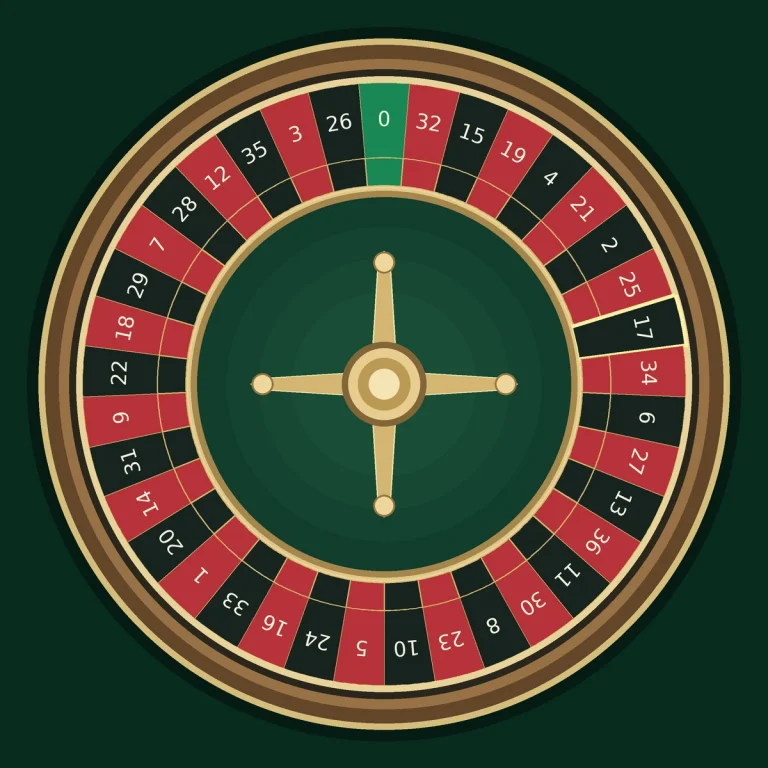
Calculate roulette odds by bet and wheel
Choose a wheel and bet to see the one-spin odds. Set the spin count, target hits and streak length to calculate repeated-spin probabilities. Each spin is assumed independent, with the same coverage and equally likely pockets.
Current calculation
A straight bet on European roulette covers 1 of 37 pockets, so its one-spin hit chance is 2.70%. Over 10 spins, the probability of one or more hits is 23.97%.
Compare two probability scenarios
A stays fixed. B follows the fields above. Differences are B minus A. pp means percentage points; differences are rounded to 0.01 pp.
| Measure | A · Saved | B · Current | Difference |
|---|
A higher hit chance is not a measure of profitability. French zero rules change settlement, not the chance of a covered pocket landing. A miss here means no covered pocket lands.
A is saved for this page visit only. Reloading the page clears the saved comparison.
Roulette odds chart: European vs American
Probability counts the covered pockets as a fraction of the wheel. Odds against compare uncovered pockets with covered pockets: a European straight bet has a 1 in 37 chance and odds against of 36:1. French wheels have the same pocket probabilities as European wheels.
| Bet type | Covered pockets | European / French chance | European / French odds against | American chance | American odds against |
|---|---|---|---|---|---|
| Straight | 1 | 1/37 · 2.70% | 36:1 | 1/38 · 2.63% | 37:1 |
| Split | 2 | 2/37 · 5.41% | 35:2 | 2/38 · 5.26% | 18:1 |
| Street | 3 | 3/37 · 8.11% | 34:3 | 3/38 · 7.89% | 35:3 |
| Corner | 4 | 4/37 · 10.81% | 33:4 | 4/38 · 10.53% | 17:2 |
| Six line | 6 | 6/37 · 16.22% | 31:6 | 6/38 · 15.79% | 16:3 |
| Dozen / Column | 12 | 12/37 · 32.43% | 25:12 | 12/38 · 31.58% | 13:6 |
| Red / Black | 18 | 18/37 · 48.65% | 19:18 | 18/38 · 47.37% | 10:9 |
| Odd / Even | 18 | 18/37 · 48.65% | 19:18 | 18/38 · 47.37% | 10:9 |
| High / Low | 18 | 18/37 · 48.65% | 19:18 | 18/38 · 47.37% | 10:9 |
| American first five | 5 | Not available | Not available | 5/38 · 13.16% | 33:5 |
A hit means a covered pocket lands. With custom combinations, that does not necessarily mean an overall profit. On French even-money bets, a zero can return half the stake under la partage or hold it under en prison; this tool counts zero as a miss of the selected red/black, odd/even or high/low outcome.
How to use the roulette probability calculator
How roulette odds are calculated
Every standard roulette bet covers a fixed number of pockets. A straight bet covers one number, a split covers two, a street covers three, and an even-money bet covers eighteen. For racetrack sectors and neighbour packages, the call-bet coverage calculator identifies the covered pockets and required units before those numbers are entered as custom coverage. If several different bets overlap on the same spin, coverage alone is not enough to determine the final result; use the combined-bet outcome calculator for pocket-by-pocket settlement.
The wheel type then determines the denominator. European and French roulette use 37 pockets, while American roulette uses 38 pockets because of the additional double zero. A triple-zero wheel uses 39 pockets and lowers the hit probability of the same fixed-coverage bet again.
This is why the same bet type has slightly lower hit probability on an American wheel even when the standard payout ratio appears similar. Use the roulette payout calculator for stake, net profit and gross return, and the RTP and expected-loss model for the long-run cost created by the wheel rules.
Why multi-spin odds feel different
A single straight bet on European roulette has only a 2.70% chance to hit. Across multiple spins, the probability of recording one or more hits rises, but it does not rise in a straight line.
The correct calculation starts with repeated misses. Subtract the probability of missing every selected spin from 1 to find the one-or-more-hit result.
This is also why long losing streaks are not automatically suspicious. Low-probability bets can miss many times in a row under normal mathematical variance, and a streak by itself does not establish that a wheel or RNG is unfair.
Exact hit counts and losing runs
With independent spins and a constant hit probability, the number of hits across a fixed set of spins follows a binomial distribution. The chance of landing an exact count combines three parts: how many ways the hits can be arranged, the win chance raised to the number of hits, and the miss chance raised to the remaining spins.
Exactly x hits = C(n, x) · px · (1 − p)n−x At least x hits = 1 − P(0) − P(1) − … − P(x−1)Losing runs are a separate question. The calculator tracks how likely a run of at least the chosen number of consecutive misses is to appear anywhere within the selected spins. Even positions that cover almost half the wheel produce long runs under normal variance: red misses five times in a row far more often than intuition suggests, and a straight number missing dozens of spins in a row is routine rather than suspicious. The roulette session simulator shows how finite random samples can deviate from these exact probabilities.
Odds against, probability and payout odds
For a bet covering m of N equally likely pockets, the hit probability is m/N. Odds against a hit are (N − m):m, reduced to a ratio. The fair decimal odds are N/m; these describe the total return per unit that would break even mathematically for an all-or-nothing wager.
Probability = m / NOdds against = (N − m) : mFair decimal odds = 1 / p = N / mFor one number on a European wheel, these are 1/37 = 2.70%, odds against of 36:1 and fair decimal odds of 37.00. The standard casino payout is 35:1 profit, equivalent to a total return of 36 units including the winning unit stake. That difference creates the house edge. The fair decimal figure in this calculator is not a casino payout quote.
For red on the same wheel, the figures are 18/37 = 48.65%, odds against of 19:18 and fair decimal odds of about 2.06. American red has odds against of 20:18, simplified to 10:9. Neither wheel gives red a 50% chance because zero pockets are outside red and black.
For multiplier variants, the Lightning Roulette calculator covers their payout and RTP rules.
Repeated-spin odds: worked examples
One number over 10 European spins. With p = 1/37, the chance of at least one hit is 1 − (36/37)10 = 23.97%. The chance of no hits is 76.03%, and the expected number of hits is 10/37 = 0.27. Expected hits are an average count, not a probability.
One number over 37 European spins. The expected count is one hit, but the chance of at least one hit is only 1 − (36/37)37 = 63.71%. Increasing the session length does not make a hit certain.
Three distinct numbers over 10 European spins. Covering 0, 17 and 32 gives a one-spin hit chance of 3/37 = 8.11%. Keeping those numbers covered for all 10 spins gives a 1 − (34/37)10 = 57.07% chance of at least one hit. Select custom coverage and enter 3 to reproduce it. An extra chip or an overlapping bet on 17 does not add another covered pocket; a hit here does not necessarily mean the combined bets make a profit.
Five misses: which question are you asking?
For a bet on red on a European wheel, a miss means black or zero, so the one-spin miss chance is 19/37. These two events have different probabilities:
To compare wheels, save the European calculation as scenario A, switch to American, and keep the bet, spins and targets unchanged. The comparison then isolates the effect of the extra zero pocket.
European and French roulette odds
European and French roulette use the same single-zero wheel, so the raw probability of each bet type is the same. A straight bet has a 1 in 37 chance, while an even-money bet covers 18 of 37 pockets.
The difference appears in rule treatment, not in physical probability. French la partage can reduce the cost of losing to zero on even-money bets, but the chance of red, black, odd, even, high or low winning remains 18 out of 37.
For raw probability, European and French wheels can usually be grouped together. Use the single-zero wheel tool for a European preset and the French rules tool when zero treatment affects expected return.
To connect these calculations to the games listed in a lobby, compare roulette table rules across casinos. Check the wheel format and zero-settlement rules for the specific table: those settings determine which probability and expected-return model applies.
American roulette odds
American roulette adds a double zero, so every standard bet is measured against 38 pockets instead of 37. A straight bet has a 1 in 38 chance on each spin, and an even-money bet covers 18 of 38 pockets. One expected hit in 38 spins does not guarantee a hit during a particular 38-spin session.
Standard payouts do not compensate for the extra pocket. That is why American roulette has a higher house edge even when the bet names look almost identical.
The first five bet is a special American-only case. It covers five numbers, but its payout structure creates a worse house edge than the standard double-zero bets. The double-zero wheel tool shows that rule in its full context.
Common probability mistakes in roulette
Roulette odds do not turn previous spins into a signal. If black has landed five times in a row, that does not make red mathematically due on the next spin. The spin-history analyzer summarizes past frequencies without claiming that they predict the next result.
Another mistake is confusing hit frequency with profitability. Even-money bets hit more often than straight bets, but they also pay much less when they win, so probability and payout should be read as separate measures. When several bets are combined, a covered pocket can still fail to produce an overall profit because the total stake and overlapping returns matter.
A third mistake is assuming that a longer session removes short-term risk. More spins increase the amount of total action exposed to the house edge, while a staking progression changes bet size after wins and losses rather than the probability of the next wheel result.
Roulette odds and probability questions
What are the odds of hitting a straight number?
A straight number has a 1 in 37 chance on European or French roulette, about 2.70%. On an American wheel it has a 1 in 38 chance, about 2.63%.
What are the odds of winning at roulette?
It depends on the bet and wheel. Standard even-money bets have the highest one-spin win chance at 18/37, or 48.65%, on a single-zero wheel and 18/38, or 47.37%, on an American wheel. A straight number has a 1/37, or 2.70%, chance on European or French roulette and 1/38, or 2.63%, on American roulette.
How do I calculate the chance of at least one hit?
Raise the one-spin miss probability to the number of spins, then subtract that result from 1. The calculator applies this complement method automatically.
What is the probability of exactly X hits?
Exactly-X probability follows the binomial distribution. It combines the number of possible hit arrangements with the probability of the selected number of wins and misses.
Can roulette probability predict the next spin?
No. Roulette odds describe possible outcomes and repeated-spin risk; they do not identify the next result. For example, the probability of eight reds on eight European spins selected in advance is (18/37)8 = 0.31%. Once seven reds have already occurred, the chance that the next spin is red is still 18/37 = 48.65%. The whole sequence and the next spin given the observed history are different questions.
Calculation assumptions and references
Results assume a fair wheel with equally likely pockets, independent spins and unchanged coverage. The repeated-spin results are calculated analytically. The streak calculation tracks unfinished miss runs and counts the probability of reaching the selected length at least once. It does not estimate financial loss, wheel bias or future numbers from past spins.
- Wizard of Odds: roulette rules, bet coverage and standard payouts.
- All probabilities in the chart follow directly from the covered-pocket counts and the formulas above.
Was this tool helpful?
What went wrong?
For calculation problems, inputs and results are attached to your report.